
The Schemata Drop: Making 3D Training Content Faster to Build with Tessera

For teams training people on complex equipment, Tessera helps us automatically turn real-world captures and existing documentation into interactive 3D content.
Behind every useful 3D training experience is a series of practical considerations: which parts matter, what are they called, where should we direct someone’s attention, and how should we explain a procedure. Turning those considerations into a lesson has traditionally required substantial work from content teams and technical artists. Tessera is the platform we use to bring that work together, and where our research speeds it up.
The Problem We’re Solving
You already have the equipment and the technical manual. Your experienced technicians know how everything fits together. But turning that knowledge into an interactive lesson still requires someone to connect the pieces.
A detailed 3D capture helps immensely, but an author still needs to identify components, match them to the documentation, and prepare lessons that make them easy to understand. Repeat that across dozens of parts and procedures, and content preparation and updates become a significant burden.
We encountered this ourselves. Early on, we spent hours manually identifying components in our 3D scenes so we could highlight them during training. Each finished scene was useful, but getting it ready took hours of work we knew we could reduce.
What We Built
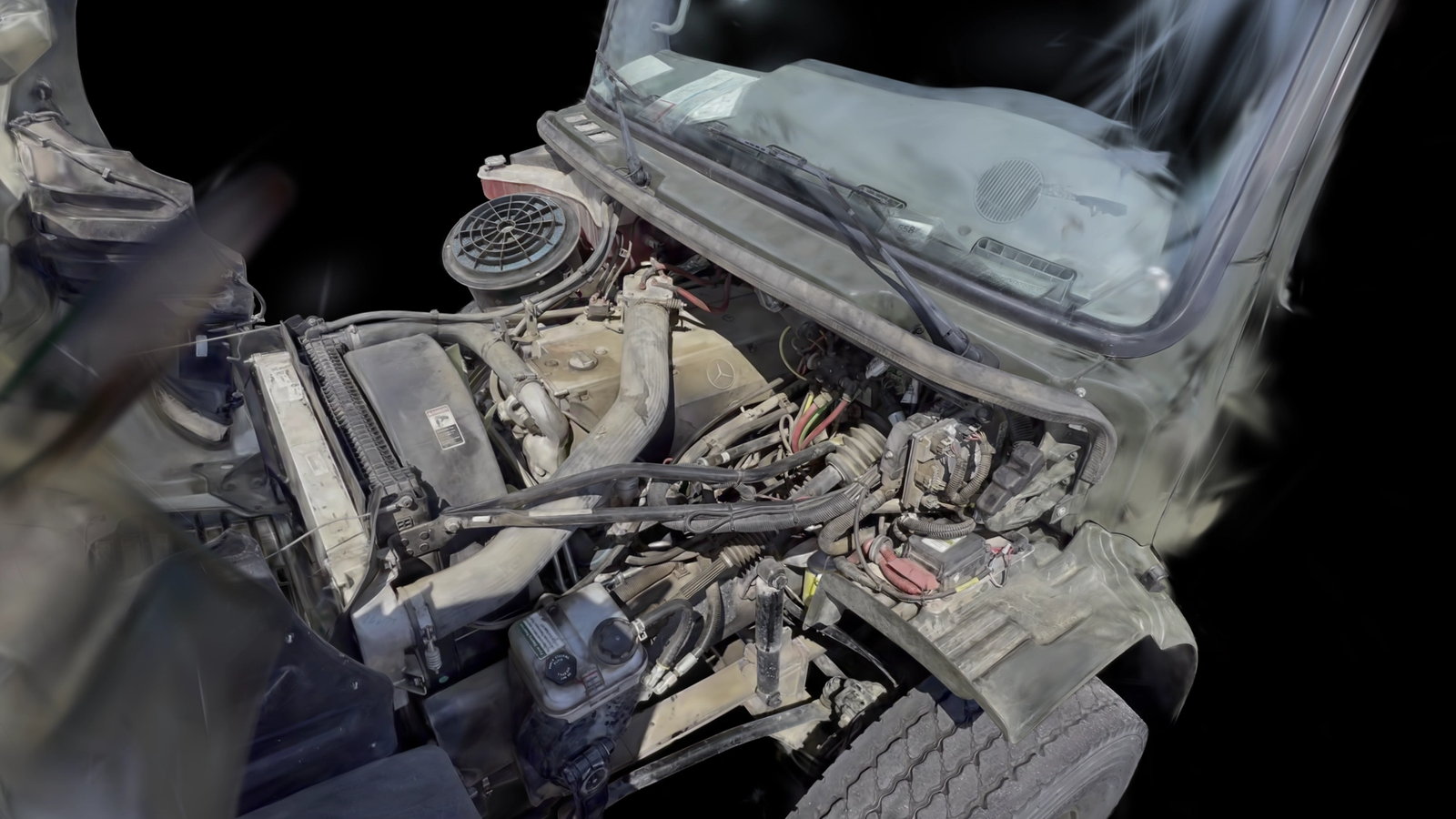
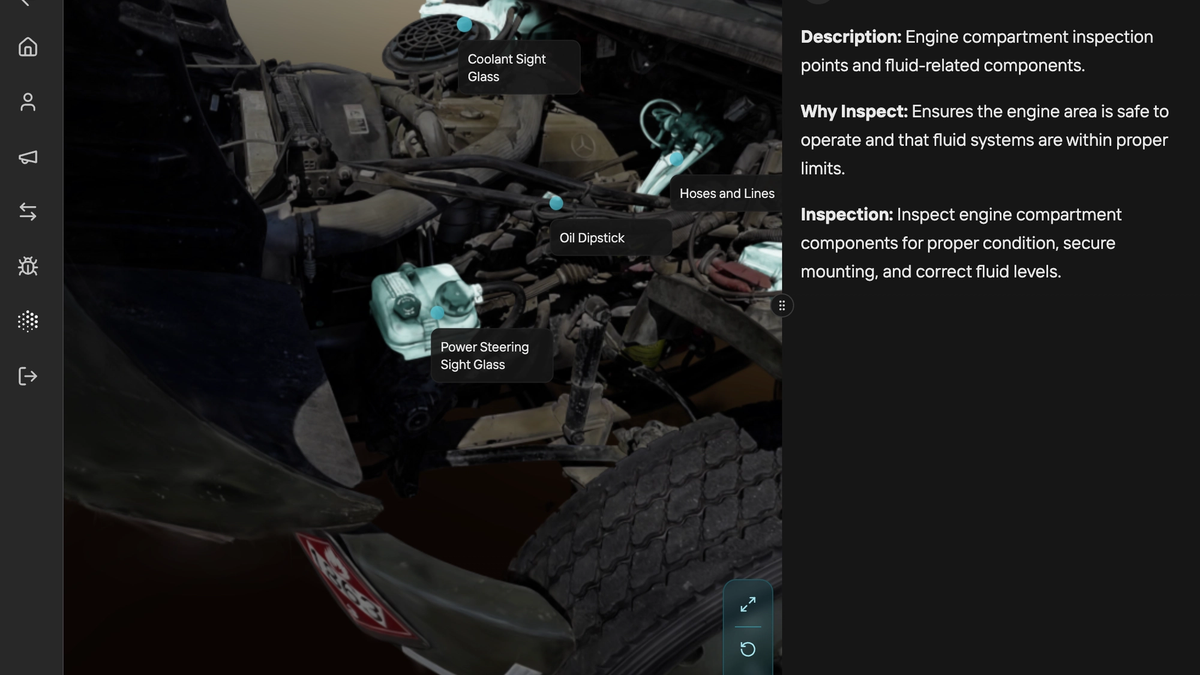
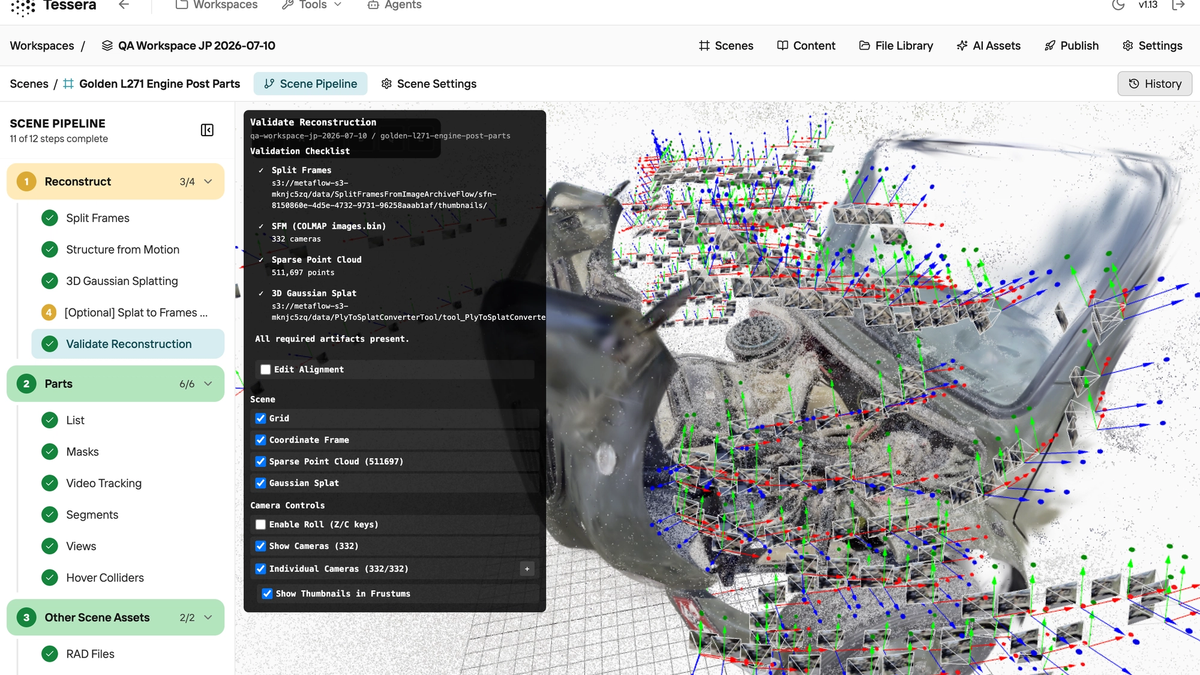
3D Gaussian splatting gives us detailed captures of real equipment. Tessera combines those captures with computer vision and language models to generate usable, labeled 3D content. The result is specific to the particular equipment and training domain, and can respond to edits and new information as needs evolve.
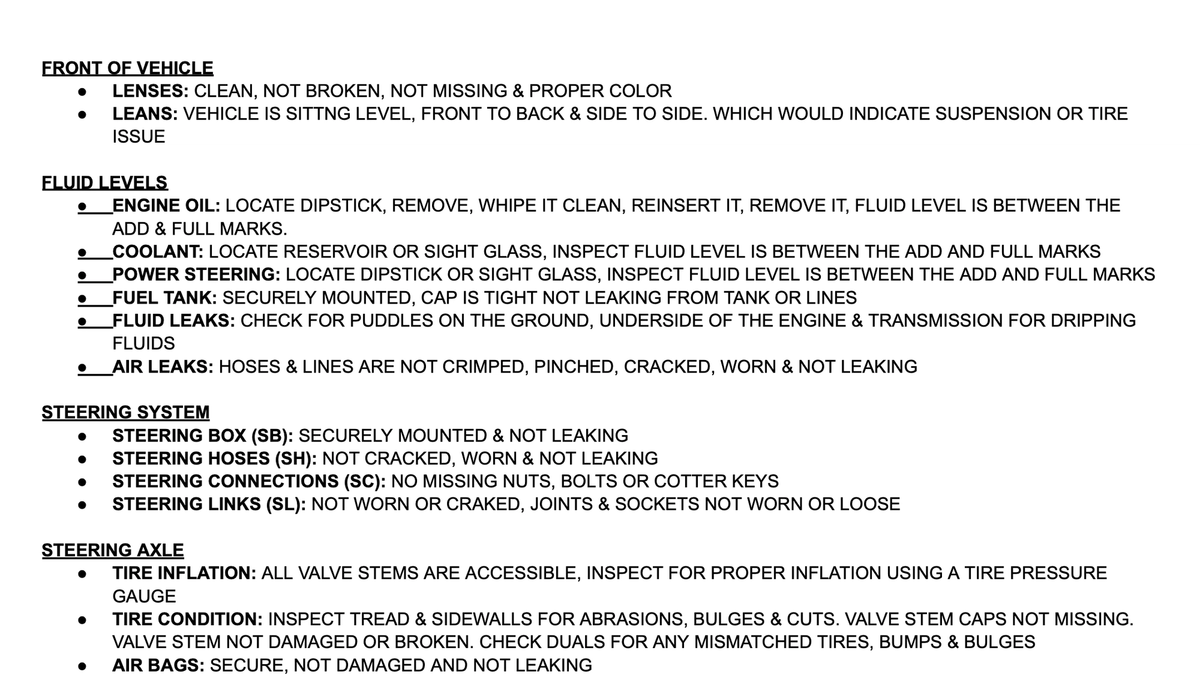
Organize the knowledge behind the lesson. Language models extract equipment terminology, component relationships, and described operating states from technical documentation. This turns information spread across manuals into structured context for explaining what a system does, how it is configured, and what a trainee needs to understand.
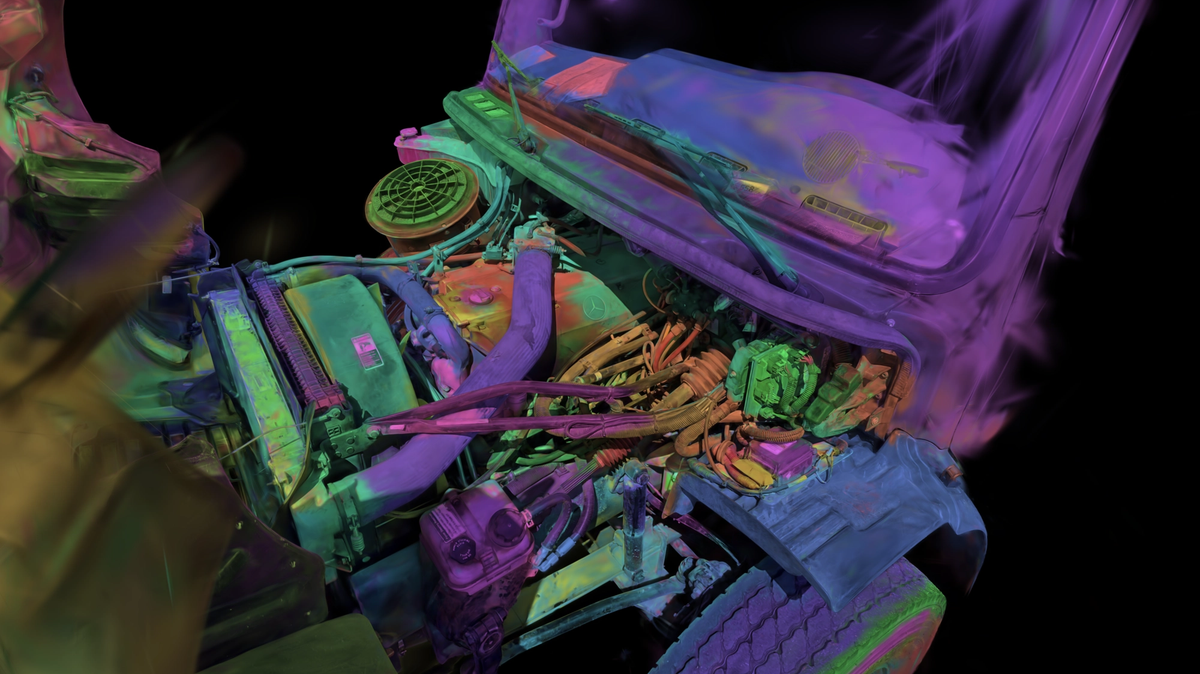
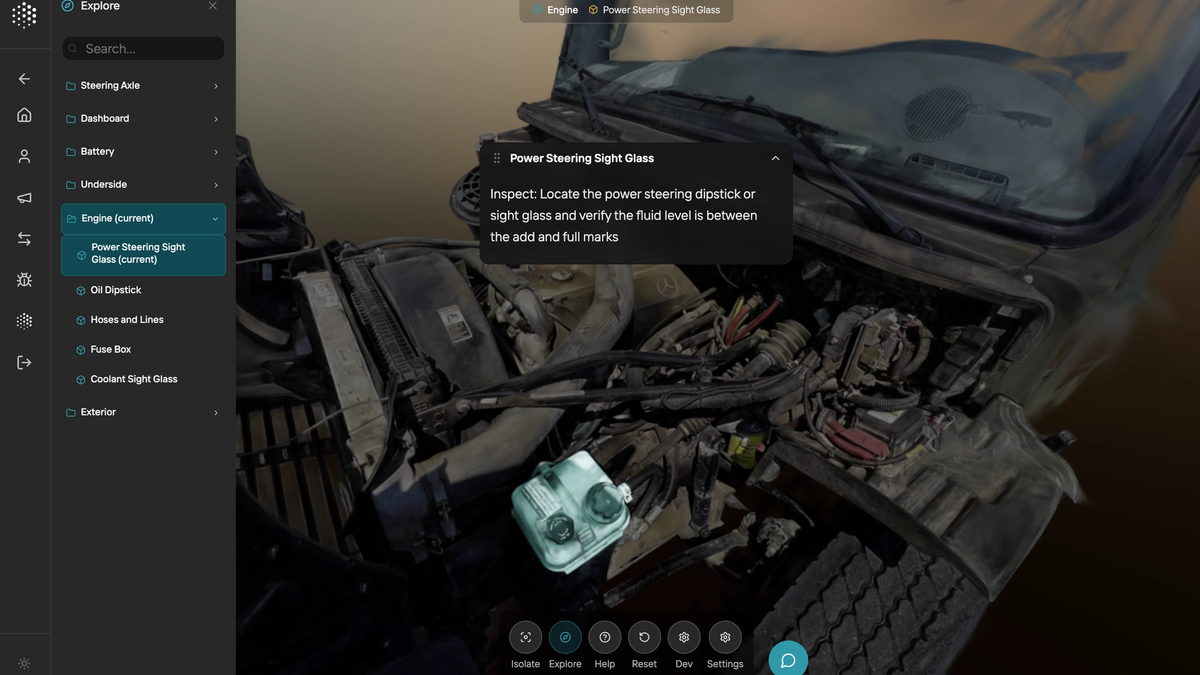
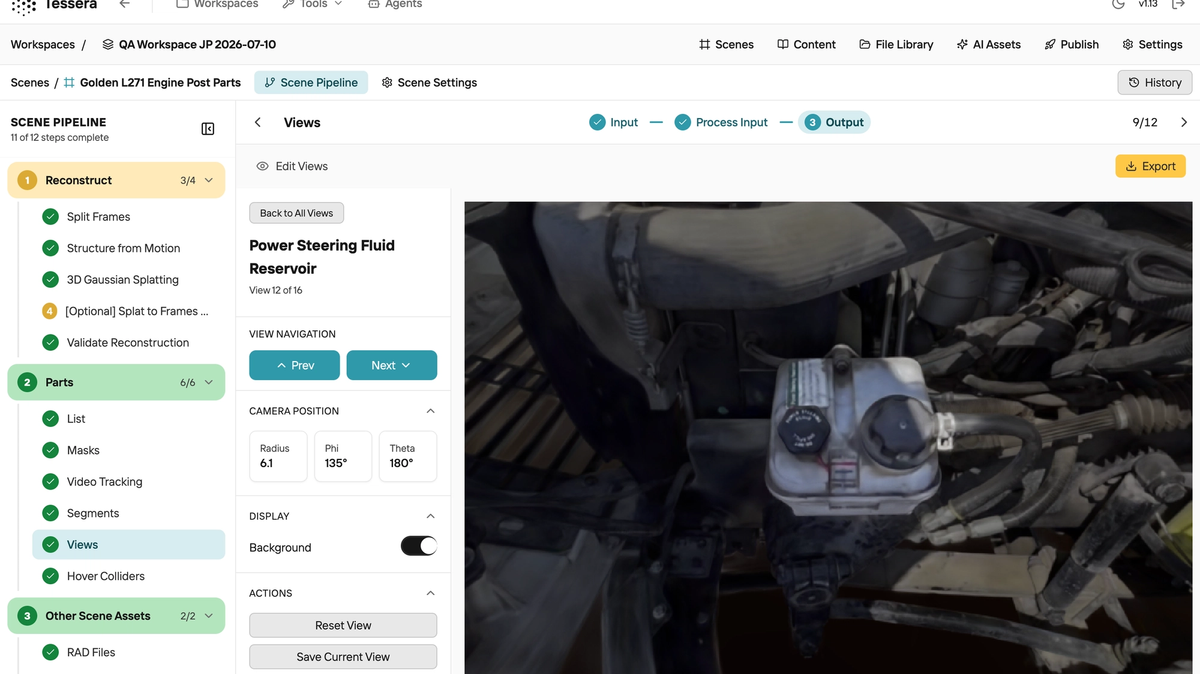
Make the equipment interactive in 3D. Vision-language models connect that technical context to captured images and scans. Image feature embeddings and multi-view geometry help separate the captured scene into distinct 3D components. Learners can isolate, highlight, and inspect those components from different angles, making the equipment’s physical layout easier to understand.
Get content made for you, and keep it current. Tessera delivers a labeled, segmented 3D scene ready to use. Authors can adjust names, boundaries, and views, or provide additional documentation to update the result. Editing becomes a way to tailor and extend generated content as requirements change.
Where This Is Going
Training should behave like a living document, evolving with the equipment, procedures, and people it serves. Creating content faster is the first step toward making this a continuous process.
Tessera’s connection between technical documentation and editable 3D assets gives us a foundation for that future. We’re working toward a system that can accept new documentation, imagery, and expert input to help troubleshoot and answer questions as information changes.
Trainees and subject-matter experts would participate directly in that process. A trainee could ask a question beside a confusing step. An SME could clarify the instruction, add context, or demonstrate a detail within the same experience. Tessera could turn those contributions into clearer explanations and updated visual guidance, with experts validating what becomes part of the training.
In that future, using the training tool also helps improve it. Questions reveal where more explanation is needed, experts contribute their knowledge in context, and the content evolves alongside the work it supports.
What This Means For Your Team
Your equipment and technical documentation are the starting point. Request a Schemata demo to explore how we can turn them into interactive training content for your team.