
The Schemata Drop: Schemata Answers Questions at the Point of Need

For military vehicle maintainers and the teams that support them, Schemata now turns your Technical Orders and SOPs into AI-powered technical guidance available during the job itself.
You're halfway through a repair and something doesn't match the procedure. The vehicle is a different model year. The symptom isn't covered by the troubleshooting flowchart. The person who would know the answer is on another shift or half-way across base.
So you start searching. You flip through a 600-page TO. You open PDFs and Ctrl+F for keywords. You print the pages you think are relevant and hope you grabbed the right section. Or you make your best call and move on.
One mechanic at Whiteman Air Force Base put it plainly:
"Sometimes you get into a moment where you just have to guess. I guilt trip myself even after, especially when it's a billion dollars worth of equipment. If a bolt comes loose on the flight line, they'll backtrack to who last worked on that."
These moments are exactly what we built this for.
Bringing AI into the Workflow
Schemata has always been about making complex equipment knowledge accessible. With this release, that knowledge becomes available during maintenance, inspection, troubleshooting, and repair, not just during training.
Once your Technical Orders, manuals, SOPs, and maintenance videos are ingested, three things change for a technician on the floor:
1) Ask questions in plain language.
Instead of searching through hundreds of pages of documentation, technicians can ask questions naturally:
- What torque spec applies here?
- Is this the correct replacement part?
- What are the next troubleshooting steps?
Schemata retrieves and cites the relevant sections of your documentation, providing an answer grounded in approved procedures rather than a list of search results.
2) Get guidance tailored to the situation.
Technicians encounter unexpected conditions, unfamiliar components, incomplete documentation, and situations where the next step isn't obvious.
Schemata provides guidance based on the equipment, procedure, and information available at that moment. Users can ask follow-up questions, request clarification, and explore related procedures without stopping work to search across multiple manuals.
Whether someone is diagnosing an issue, interpreting a procedure, or trying to understand the purpose of a component, the assistant helps connect documentation to the task at hand.
3) Understand systems, not just documents.
Many maintenance questions are fundamentally spatial.
How does this subsystem connect together? Where does this line route? Which components interact with this assembly?
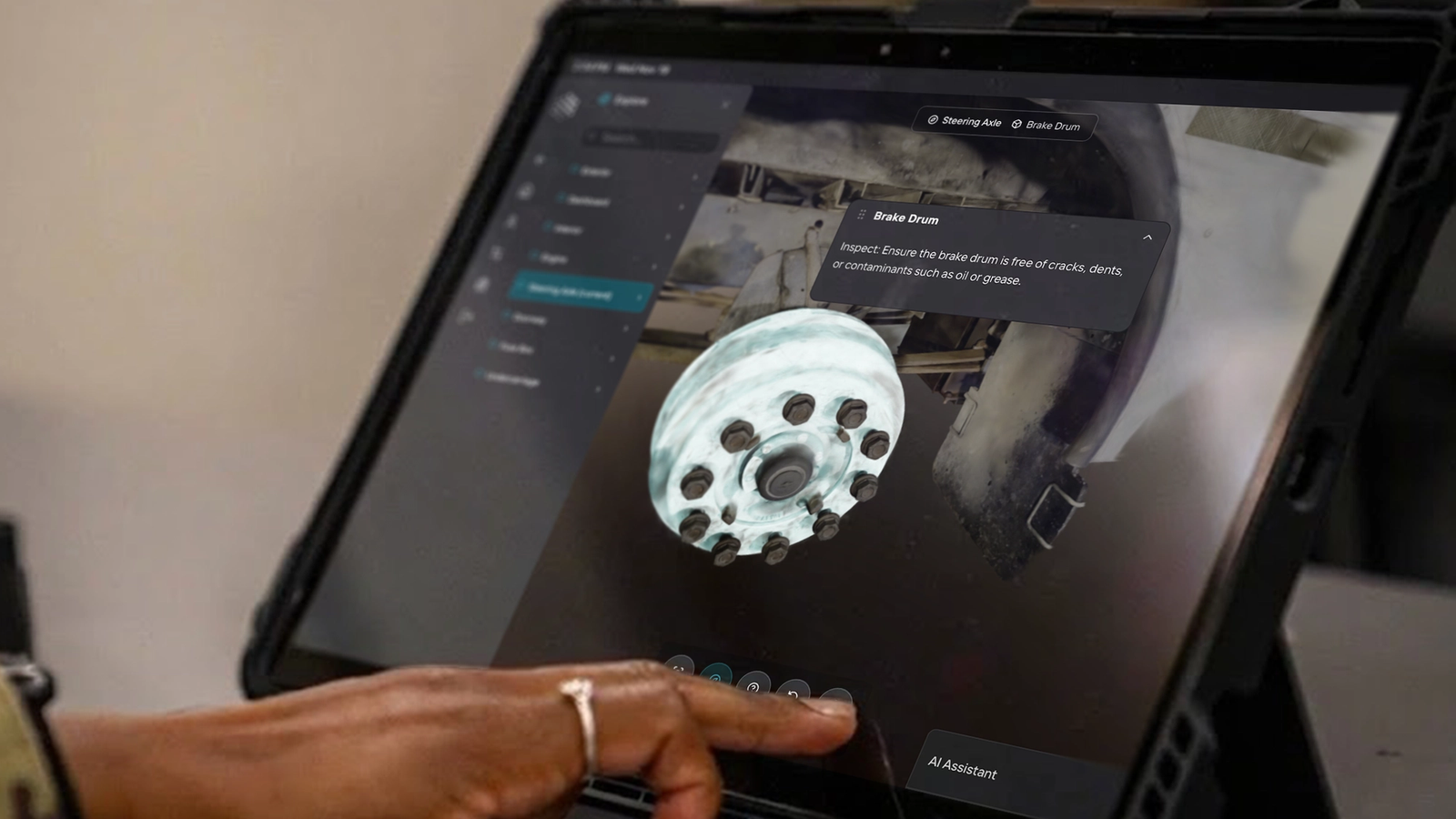
For equipment that has associated 3D content, Schemata can provide interactive visualizations, animated walkthroughs, and exploded views that help technicians understand how systems fit together and how procedures relate to the physical equipment.
More than Search
Search still puts the burden on the technician to know what they're looking for. Schemata knows what system they're on, what step they're at, and what they're looking at. The response is built around that context.
It's also built on your documentation, not general knowledge. That matters because maintenance content is specialized, often access-controlled, and structured differently from anything a general-purpose AI has seen. Every answer points back to the specific page it came from, so what you get is grounded in your own approved procedures, not a best guess. That same grounding is what makes the exploded views and walkthroughs possible, they come from your exact equipment and manuals. Getting a useful answer requires that the underlying knowledge is right.
Getting started
Schemata's on-the-job guidance is available now. Existing customers can reach out to their account contact to get their documentation ingested.
New to Schemata? Request a demo to see it working with your own content.
We're continuing to evolve this experience with input from our customers. Try it out and share your feedback to help shape what's next.